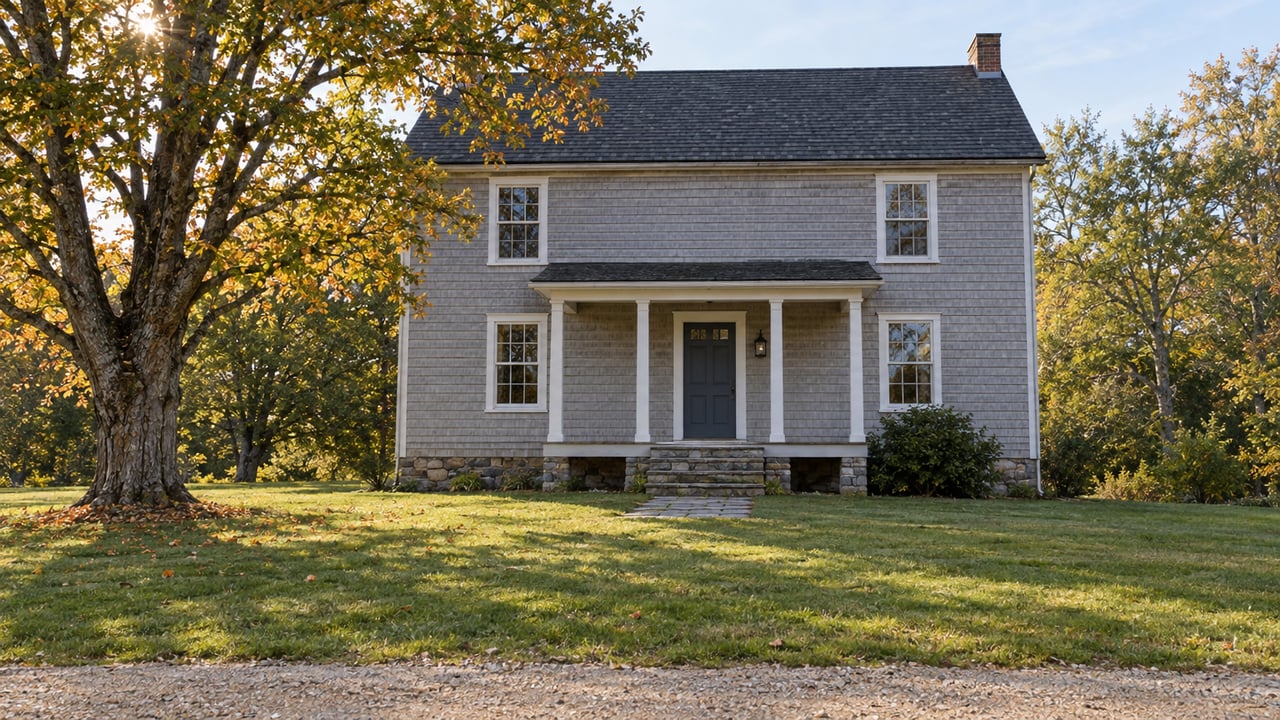
The Connecticut Examiner quoted Sarah Zuro describing the farm she and her husband Brian bought on Wintechog Hill Road: "We like to say that we're changing the liquid but keeping many of the traditions." The land used to run a dairy herd. Now it runs seven grape varieties across 30 planted acres, with a tasting room meant to follow once construction catches up to the vines.
The property is called Greystone Winery, and if you've driven Wintechog Hill Road in the past year you've probably noticed the change even if you didn't know the name for it. What used to be an overgrown, half-forgotten dairy farm, on the market in some form since before the Zuros were married, is now a working vineyard on a south-facing slope the family calls Everbreeze Hill. The bottling building isn't finished. The hospitality barn hasn't broken ground. But the harvest already happened, and a September posting for an assistant winemaker shows the operation was still hiring.
What's easy to miss, if you only think about it as one new business, is that Greystone isn't really a standalone story. It's the newest entry in a cluster of wineries that's been quietly filling in this corner of Connecticut for two decades, and North Stonington's back roads now carry more of that traffic, in more directions, than most residents have had reason to track.
What's Actually Growing on Everbreeze Hill
Greystone sits on more than 200 acres that once belonged to a dairy operation, with a 35-acre main field of which 30 acres are already planted in a mix of red and white grapes. The 2025 harvest was shipped to a winery in New York's Finger Lakes region for pressing and fermentation, with the finished wine expected back on site once the Zuros' own bottling plant is running. Their vineyard manager, Dan Spurr, has been overseeing both the vines and the technology meant to keep the operation efficient as it scales.
The plans that went before North Stonington's Planning and Zoning Commission describe a tasting building of 13,580 square feet, split into two tasting rooms with a covered porch and outdoor terrace, plus a second building where visitors will look down into the tank room, barrel room, and bottling room from an observation loft. The commission's review flagged enough site disturbance, close to 11 acres, that the project also needs approval from the state's environmental protection agency, and members asked pointed questions about traffic and sight lines on the surrounding roads.
The target the Zuros described last fall was a summer 2026 opening to the public, with weddings and other events to follow once the hospitality barn is built. The target remained tentative, with the exact opening date not yet confirmed.
The Neighbors Already There
Greystone didn't arrive in empty country. Sarah Zuro named the immediate neighbors herself: Jonathan Edwards Winery, Stonington Vineyards, and Kingdom of the Hawk Vineyard, all within a short drive. Brian Zuro told the Connecticut Examiner that the wineries call each other when they spot a pest or a disease in the field, describing them as "on the bat line together."
Jonathan Edwards is the elder of the group by a wide margin. It opened to the public in 2001 on a 48-acre hilltop off Chester Main Road, its tasting room built inside a restored 1880 dairy barn, which makes it another example of a farm trading cows for grapevines. Jonathan Edwards has spent 25 years building out the kind of programming a newer winery hasn't gotten to yet: a tasting room open seven days a week year-round, self-guided flights, and an annual footrace called Run the Vineyards that finished its third year in May 2026, starting and ending on the winery's own grounds with a course that runs a mile through the vines.
A few miles the other direction sits Saltwater Farm Vineyard in Stonington, 108 acres with a tasting room built into a refurbished World War II-era airport building, and Stonington Vineyards itself. None of these operations are competing for the same customer on the same afternoon so much as they're forming a route.
The Corridor Keeps Widening
Cross into Westerly and the map fills in further. Tapped Apple Winery and Cidery and Langworthy Farm Winery both operate a few miles south of the North Stonington cluster, and Maugle Sierra Vineyards sits roughly seven miles away in Ledyard. One wine-trail site lists Jonathan Edwards about 2.3 miles from Stonington Vineyards, Saltwater Farm Vineyard about 4.1 miles away, Tapped Apple Winery in Westerly a similar 4.1 miles, and Langworthy Farm Winery another 6.6 miles out, all measured from the same starting point. None of these are single-destination drives anymore. They're stops on a loop, and Greystone is positioned to become one more.
What used to be a scattering of dairy and produce farms along these roads has become dense enough that Connecticut's own Wine Trail groups several of these stops together, and out-of-town visitors already talk about doing two or three tastings in a single afternoon rather than picking one winery and calling it a day trip.
What This Means If You Live Here
For a resident, the practical shift shows up less in wine lists and more in what the roads themselves are asked to carry. Jonathan Edwards closes its tasting room half an hour early on peak-season weekends between May and October because of private events, weddings mostly, held on the lawn. The Run the Vineyards 5K shuts down the winery's own driveway and a mile of vineyard road each May for runners and a finish-line crowd. Greystone's own zoning approval anticipates a similar mix once it's fully built out: wine festivals, wine dinners, member events, and weddings, with the commission specifically pressing on how that traffic would move and where sight lines might get tight on a road that wasn't built with tour buses or wedding parties in mind.
None of that is a complaint about the wineries themselves. It's a description of what happens when a handful of quiet farm roads become a recognized stop on a regional wine trail rather than a route locals use mostly to get somewhere else. The corn that used to grow on this hillside to feed local dairy herds is gone. In its place, seven grape varieties climb a south-facing slope, aimed, like the tasting room windows planned above them, toward Long Island Sound.
Dan Contino has driven these back roads long enough to remember what most of this land looked like before the vines went in, and he's always glad to hear which of the newer tasting rooms is worth the detour. If you want to talk about what's changing along Wintechog Hill or anywhere else in North Stonington, reach out to Dan Contino.